• Skip to primary navigation
  • Skip to main content
  • Skip to primary sidebar
technzee logo

Technzee

reaking Down the Machines That Power Computing

  • Home
  • Blog
  • Terms
    • Privacy
    • Disclaimer
  • Support
  • Subscribe
  • Contact
  • Show Search
Hide Search

gaming

🧠 AI vs 🎮 Gaming vs 🛡️ Security Software

March 20, 2026 by Rajeev Bagra

A Practical Guide to Programming, Hardware Needs, and Learning Paths

In today’s computing world, three domains dominate attention—Artificial Intelligence (AI), Gaming, and Security software (Antivirus & Password Protection).

At first glance, they seem completely different:

  • AI feels like “smart machines”
  • Gaming feels like “entertainment”
  • Security feels like “protection”

But under the hood, they share the same computing foundations—while diverging sharply in goals, programming styles, and hardware needs.

Let’s break it down in a clear, practical, and beginner-friendly way.


🔷 The Common Ground: What They All Share

Before comparing differences, it’s important to understand that all three are built on the same core pillars.

💻 1. Programming Foundations

Regardless of domain, you’ll encounter:

  • C / C++ → performance-critical systems
  • Python → flexibility (especially AI & security)
  • JavaScript → interfaces & tools

All three rely on:

  • Data structures & algorithms
  • Memory management
  • OS-level interactions

⚙️ 2. Hardware Dependency

Every domain depends on:

  • CPU → executes logic
  • RAM → stores working data
  • Storage → files, models, assets

But how they use hardware differs (we’ll explore that soon).


🔐 3. Security is Everywhere

Even if security is its own domain:

  • AI must protect user data
  • Games must prevent cheating
  • Antivirus tools exist to secure systems

👉 Security is not optional—it’s foundational.


🔶 The Key Differences (Where Things Get Interesting)

Now let’s explore how these fields diverge in software design and hardware usage.


🧠 Artificial Intelligence (AI)

🧩 Software Approach

AI is data-driven programming.

Instead of writing explicit rules, you:

  • Train models on data
  • Let systems “learn patterns”

Popular tools include:

  • TensorFlow
  • PyTorch

🖥️ Hardware Needs

AI is extremely resource-heavy:

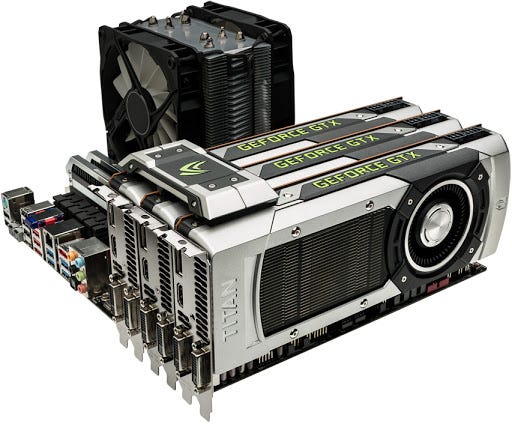
  • GPU → essential for deep learning
  • RAM → large datasets
  • Storage → training data

👉 AI = Compute + Data Intensive


🎮 Gaming

🧩 Software Approach

Gaming is real-time, event-driven programming.

Key components:

  • Graphics rendering
  • Physics simulation
  • Player interaction

Popular engines:

  • Unity
  • Unreal Engine

🖥️ Hardware Needs

Gaming demands:

  • High-end GPU → real-time rendering
  • Fast CPU → game logic
  • SSD → fast loading

👉 Gaming = Speed + Visual Performance


🛡️ Security Software (Antivirus & Password Tools)

🧩 Software Approach

Security focuses on:

  • Threat detection
  • Encryption & hashing
  • OS-level monitoring

Examples:

  • Kaspersky
  • Bitdefender

🖥️ Hardware Needs

Security tools are optimized for efficiency:

  • Minimal GPU usage
  • Continuous CPU monitoring
  • Low RAM footprint

👉 Security = Efficiency + Reliability


⚖️ Side-by-Side Comparison

FeatureAIGamingSecurity
Primary GoalLearn patternsReal-time interactionProtect systems
Programming StyleData-drivenEvent-drivenSystem-level
GPU UsageVery HighHighLow
CPU UsageHighHighModerate
Memory NeedsVery HighHighLow–Moderate
Key ChallengeAccuracyFPS (smoothness)Detection accuracy

🧭 Learning Path for Each Domain

Now the most important part—how to actually get started.


🧠 AI Learning Path

Step 1: Foundations

  • Python
  • Math (linear algebra, probability)

👉 https://www.python.org/about/gettingstarted/
👉 https://www.khanacademy.org/math


Step 2: Data & Machine Learning

  • NumPy, Pandas
  • Scikit-learn

👉 https://scikit-learn.org/stable/


Step 3: Deep Learning

  • TensorFlow
  • PyTorch

👉 https://www.tensorflow.org/learn
👉 https://pytorch.org/tutorials/


Step 4: Projects

  • Chatbots
  • Recommendation systems
  • Image classifiers

🎮 Gaming Learning Path

Step 1: Programming

  • C# (Unity) or C++ (Unreal)

Step 2: Game Engines

  • Unity
    👉 https://learn.unity.com/
  • Unreal Engine
    👉 https://dev.epicgames.com/community/learning

Step 3: Concepts

  • Physics
  • Animation
  • Rendering

Step 4: Projects

  • 2D games
  • 3D environments

🛡️ Security Learning Path

Step 1: Basics

  • Networking
  • Operating Systems (Linux)

👉 https://linuxjourney.com/


Step 2: Programming

  • C / C++
  • Python

Step 3: Cybersecurity

  • Cryptography
  • Ethical hacking

👉 https://www.cybrary.it/
👉 https://owasp.org/


Step 4: Practice

  • Wireshark
  • Metasploit
  • Build your own password manager

🧠 Final Thoughts

If you zoom out:

  • AI builds intelligent systems
  • Gaming builds immersive experiences
  • Security protects everything

They are not competitors—they are layers of the same digital ecosystem.

👉 The real difference lies in what they optimize for:

  • AI → intelligence
  • Gaming → performance
  • Security → protection

🚀 What Should You Choose?

  • Love math & data? → AI
  • Love visuals & creativity? → Gaming
  • Love systems & protection? → Security

Or even better—you can combine them:

  • AI-powered security tools
  • AI-driven game NPCs
  • Secure AI systems

🚀 Why Mastering Hardware Is the Key to Becoming a Complete AI & Robotics Engineer

February 18, 2026 by Rajeev Bagra

Image
Image
Image
Image

For years, most tech learners followed a familiar path:

Learn programming → Build websites → Create apps → Work in software.

While this path still offers great opportunities, a major shift is happening today.

The future of AI is no longer limited to screens.

It is moving into machines, robots, vehicles, factories, homes, and cities.

And at the center of this shift lies one crucial skill:

Hardware expertise.

This article explains why learning hardware alongside AI can transform your career—and how you can start today.


🌍 The New Reality: AI Is Leaving the Screen

Traditional AI development focuses on:

  • Web applications
  • Mobile apps
  • Recommendation systems
  • Chatbots
  • Data dashboards

These are powerful tools—but they live inside software.

Now look at modern innovations:

  • Self-driving vehicles
  • Delivery robots
  • Smart factories
  • Medical robots
  • Agricultural drones
  • Smart homes

All of them combine:

🧠 Intelligence + ⚙️ Physical systems

Without hardware knowledge, you can only build half the system.


🧩 Why Hardware Knowledge Changes Everything

1️⃣ You Understand How Reality Works

Software lives in a perfect world.
Hardware lives in the real world.

In reality, you deal with:

  • Noise
  • Heat
  • Power limits
  • Mechanical failures
  • Sensor errors
  • Delays

When you understand hardware, your AI becomes:

✔ More reliable
✔ More practical
✔ More professional

You stop building “demo projects” and start building “real products”.


2️⃣ You Are No Longer Platform-Limited

Most developers are limited to:

❌ Websites
❌ Mobile apps
❌ Cloud tools

But when you know hardware, you can work on:

✅ Robots
✅ IoT systems
✅ Smart devices
✅ Embedded AI
✅ Autonomous machines

Your career options multiply.


3️⃣ You Become an End-to-End Builder

Companies today value people who can:

  • Design the system
  • Build the hardware
  • Write the AI
  • Deploy the product
  • Maintain it

These are called full-stack robotics/AI engineers.

They are rare.

They are highly paid.

They are always in demand.


🛠️ Hardware + AI = Real Innovation

Let’s see how real AI products are built.

Example: Smart Delivery Robot

A real delivery robot needs:

LayerTechnology
SensorsCamera, LIDAR, GPS
ProcessingRaspberry Pi / Jetson
IntelligenceML, Vision, Navigation
ControlMotor drivers
PowerBatteries
SoftwarePython, ROS

If you only know AI:

❌ You can train the model
❌ But you can’t deploy it

If you know hardware:

✅ You build the full product


📈 Why This Skill Set Is Future-Proof

Software Alone Is Becoming Common

Today:

  • Millions know Python
  • Thousands build apps
  • AI tools automate coding

Pure software skills are becoming crowded.

Hardware + AI Is Still Rare

Few people can:

  • Train models
  • Wire sensors
  • Control motors
  • Optimize power
  • Deploy on devices

This combination creates strong job security.


🧠 How Hardware Improves Your AI Thinking

When you work with hardware, you learn:

1. Resource Awareness

You learn that:

  • Memory is limited
  • Power is precious
  • Speed matters

Your models become more efficient.


2. Real-Time Decision Making

Robots must act instantly.

No delays.
No crashes.

You learn to build robust systems.


3. Systems Thinking

You stop thinking in files and scripts.

You start thinking in:

Complete systems.

This mindset is essential for leadership roles.


🗺️ A Practical Learning Path

Here is a realistic roadmap.


🔹 Phase 1: Software Foundation (0–4 Months)

Learn:

  • Python
  • Basic ML
  • Computer Vision
  • Data handling

Build:

  • Face detection
  • Object recognition
  • Simple ML apps

🔹 Phase 2: Electronics Basics (3–6 Months)

Learn:

  • Arduino / Raspberry Pi
  • Sensors
  • Motors
  • GPIO
  • Power systems

Build:

  • Obstacle robot
  • Smart alarm
  • Sensor dashboard

🔹 Phase 3: AI + Devices (6–10 Months)

Learn:

  • Camera integration
  • Edge AI
  • Model optimization
  • Device deployment

Build:

  • AI robot car
  • Smart camera
  • Voice robot

🔹 Phase 4: Robotics Systems (10+ Months)

Learn:

  • ROS
  • Navigation
  • Mapping
  • Simulation

Build:

  • Autonomous robot
  • Warehouse bot
  • Research prototype

🔧 Tools Every Modern Robotics Learner Needs

Hardware

  • Arduino
  • Raspberry Pi
  • Camera module
  • Ultrasonic sensor
  • Motor driver

Software

  • Python
  • OpenCV
  • TensorFlow Lite
  • PyTorch
  • ROS

Platforms

  • GitHub
  • Simulation tools
  • Cloud AI

💼 Career Opportunities You Unlock

With AI + Hardware skills, you can work in:

✅ Robotics companies
✅ Automotive firms
✅ Healthcare tech
✅ Defense & aerospace
✅ Smart manufacturing
✅ Startups

Job titles include:

  • Robotics Engineer
  • Embedded AI Engineer
  • Autonomous Systems Developer
  • AI Hardware Specialist

These roles are growing fast worldwide.


🌱 Why This Matters for Independent Creators

If you are a blogger, educator, or startup founder, this skill set gives you:

  • Product ideas
  • Prototyping ability
  • Consulting potential
  • Startup opportunities

You don’t need big teams.

You can build MVPs yourself.


✨ Final Thought: Beyond Apps and Websites

Web development and apps are important.

But they are only one layer of technology.

The next revolution is happening in:

Machines that see, think, and act.

If you master hardware with AI, you move from:

👨‍💻 Programmer
➡️ 🤖 Engineer
➡️ 🚀 Innovator

You become someone who doesn’t just write code—

You build intelligent reality.


📌 Key Takeaway

The future belongs to people who can connect software to the physical world.

Learn hardware.
Build robots.
Create real AI products.

And you won’t be limited to screens ever again.


Game Development vs Artificial Intelligence: Skills, Hardware, and Startup Pathways

February 13, 2026 by Rajeev Bagra

In today’s digital economy, game development and artificial intelligence (AI) are two of the fastest-growing technology domains. While they often overlap, they require different expertise, hardware investments, and product-development strategies.

This article explains:

  • How expertise in game development and AI is similar and different
  • What hardware each field needs
  • How users, developers, and founders build products
  • Where to learn and how to get cloud and hardware credits

Understanding Expertise: Game Development vs AI

Similarities

Both fields rely on strong foundations in:

  • Programming (C++, C#, Python, JavaScript)
  • Algorithms and problem-solving
  • Software engineering practices
  • Version control and collaboration
  • Iterative testing and optimization

Whether you are building a game or training a model, success depends on logical thinking, experimentation, and continuous improvement.

Differences

AreaGame DevelopmentArtificial Intelligence
Core FocusInteractivity, graphics, storytelling, performanceData, learning algorithms, prediction, automation
Main SkillsGame engines, physics, UI/UX, renderingStatistics, ML models, neural networks
Nature of WorkCreative + technicalAnalytical + research-driven
OutputPlayable experienceIntelligent system

Game developers primarily focus on user experience and immersion, while AI developers focus on data and decision-making systems.


Skills and Tools in Game Development

Image
Image
Image
Image
Image

Modern game developers typically work with:

  • Game engines
  • 2D/3D graphics and animation tools
  • Physics simulation systems
  • Audio and UI frameworks
  • Performance profiling and debugging tools

Popular platforms include:

  • Unity (by Unity Technologies)
  • Unreal Engine (by Epic Games)

A game developer often combines the roles of programmer, designer, and artist, especially in indie projects.

Key Skills in Game Development

  • C# or C++ programming
  • Level and environment design
  • Real-time rendering optimization
  • Multiplayer networking basics
  • Player experience design

Skills and Tools in Artificial Intelligence

Image
Image
Image

AI developers usually specialize in:

  • Data processing and cleaning
  • Machine learning and deep learning
  • Model training and evaluation
  • Cloud-based deployment
  • Automation and optimization

Common frameworks and platforms include:

  • TensorFlow
  • PyTorch
  • Scikit-learn, Keras, and NumPy

Key Skills in AI Development

  • Linear algebra and statistics
  • Python programming
  • Neural network architectures
  • Model tuning and validation
  • Responsible AI practices

AI developers focus more on mathematical reasoning and experimentation than on visual design.


Hardware Requirements: Game Dev vs AI

Hardware for Game Development

Game development needs balanced performance:

  • CPU: Multi-core processors (Intel i7/Ryzen 7 or better)
  • GPU: Dedicated graphics card (RTX series or equivalent)
  • RAM: 16–32 GB (64 GB for large projects)
  • Storage: NVMe SSD

This setup ensures smooth rendering, fast compilation, and efficient asset handling.

Hardware for AI Development

AI workloads are more resource-intensive:

  • CPU: Multi-core, mainly for preprocessing
  • GPU/TPU: High-performance GPUs with large VRAM
  • RAM: 32–64 GB or more
  • Storage: Large SSDs for datasets

Training deep learning models often requires cloud GPUs, as local systems may not be sufficient.

Comparison Summary

FeatureGame DevelopmentAI Development
GPU UsageReal-time graphicsModel training
RAM NeedsModerate–HighHigh–Very High
Cloud DependencyOptionalOften essential
Local WorkCommonLimited for big models

How Products Are Built: Users, Developers, and Founders

Role of End Users

End users (players or customers):

  • Test early versions
  • Provide feedback
  • Report bugs and usability issues
  • Shape future updates

User feedback is critical in both gaming and AI products.

Role of Developers

Game Developers:

  • Build game mechanics
  • Design levels
  • Integrate graphics and sound
  • Optimize performance

AI Developers:

  • Prepare datasets
  • Train models
  • Evaluate accuracy
  • Deploy APIs and services

In modern projects, developers often collaborate across both domains.

Role of Startup Founders

Founders manage strategy and execution:

  1. Idea & Research – Identify problems and market needs
  2. MVP Development – Build a prototype using engines or ML models
  3. Testing & Feedback – Validate with real users
  4. Cloud Scaling – Host backends and AI inference
  5. Launch & Growth – Marketing, updates, monetization

Successful founders balance technology, business, and user experience.


Learning Resources for Game Development and AI

Game Development

  • Unity Learn – https://learn.unity.com
  • Unreal Online Learning – https://www.unrealengine.com/onlinelearning
  • Udemy Game Dev Courses – https://www.udemy.com/topic/game-development
  • GDC Vault – https://www.gdcvault.com

Artificial Intelligence

  • Coursera AI Courses – https://www.coursera.org
  • Fast.ai – https://www.fast.ai
  • Google AI Learning – https://cloud.google.com/learn/ai-ml
  • MIT OpenCourseWare – https://ocw.mit.edu

Combined Learning (AI + Games)

  • AI in Game Development – https://www.coursera.org/articles/ai-for-game-development
  • Open-source projects on GitHub

Getting Cloud Credits and Hardware Support

Startup Cloud Credit Programs

Many companies support early-stage founders:

  • Google for Startups
    https://cloud.google.com/startup
  • Microsoft for Startups (Azure)
    https://startups.microsoft.com
  • Amazon AWS Activate
    https://aws.amazon.com/activate
  • NVIDIA Inception Program
    https://www.nvidia.com/en-in/startups
  • DigitalOcean Startups
    https://www.digitalocean.com/startups

These programs can provide thousands of dollars in free cloud credits.

Hardware Acquisition Options

  • Build custom PCs with GPUs and high RAM
  • Buy refurbished workstations
  • Use cloud GPU rentals
  • Apply for student/free-tier programs

Cloud platforms often provide $100–$300 free credits for beginners.


Future Trends: Where Gaming and AI Meet

The future increasingly blends both fields:

  • AI-powered NPCs
  • Procedural world generation
  • Personalized gameplay
  • Automated testing
  • Smart analytics

As AI improves, games become more adaptive and immersive, while AI applications benefit from game-like interfaces.


Final Thoughts

Game development and AI are both powerful career and business paths, but they require different mindsets:

  • Game Development focuses on creativity, interaction, and immersion
  • Artificial Intelligence focuses on data, learning, and automation

Both demand strong technical foundations, modern hardware, and continuous learning.

For developers and founders, combining these skills—supported by cloud credits and global learning platforms—offers enormous opportunities in the digital economy.


Reddit – Trending Discussions on Artificial Intelligence & Gaming

  • Best AI humanizer to bypass Compilatio in 2026? (Thesis help)
    Hey everyone, I’m currently finishing my thesis and I used AI (Claude/GPT-4) to help draft and structure several chapters. Now I’m getting paranoid about the final submission. My uni uses Compilatio, and I’ve heard their AI detector has become much more aggressive lately. I need a tool that actually works for "humanizing" the text without […]
  • What's stopping AGI from ending labor in the economy?
    If a business can hire an AGI that doesnt need fair wages and can keep up with or even outpace the intelligence of a human, why would companies not switch to that? Obviously the current generations of AI have not capped out, but that doesn't matter. We have enough already to build the next one, […]
  • Make candidate fell like they were stringly considered even if they weren't
    submitted by /u/vaitko [link] [comments]
  • Kinda feels like Sora got "laid" off because nobody could justify the compute
    This decision of theirs might be a signal of where frontier AI is actually heading Sora was impressive, no doubt, but even a short near to 10-second video could cost around $1+ to generate internally, while API pricing ranged roughly from $0.10 to $0.50 per second depending on quality . Now scale that to millions […]
  • Nobody seems to care that "reality" is coming to an end?
    I discovered today while scrolling that I can no longer tell what is real. The images, music, and "people" offering guidance in my feed are all beginning to meld together into this artificial intelligence-generated soup. We keep referring to it as a "revolution" as though it's some sort of amazing advancement, but it seems more […]
  • Marathon sold just 1.2 million copies with nearly 70% on Steam, analyst estimates: "It hasn't exactly made the splash Sony and Bungie wanted"
    submitted by /u/Freki666 [link] [comments]
  • Enjoying my favourite classic game
    submitted by /u/MartialTangent6 [link] [comments]
  • I have made an achievement in gaming around 10 years in the making. I was playing this in High School!
    The furthest I've ever went before peaked at wave 22. I guess playing TWHG 3+4 many times increased my general skill because I was locked in! submitted by /u/FrenzyHydro [link] [comments]
  • Another Set of Hidden Gems
    Most reviews around here are met with "post this where people read reviews," but if you aren't aware that something exists you aren't going to go looking for reviews. I hope my short summaries bring attention to these titles so they don't get lost in the sea of shovelware on Steam and other modern marketplaces. […]
  • Other games does focuses on bow/archery aspects?
    Love horizon dawn and monster hunter for their bow gameplay, anyone know any other games with similar style? I feel like bows is a niche thing even though we see them in all games and only a few games really tries to have them as the main focus. submitted by /u/runnbl3 [link] [comments]

Primary Sidebar

Recent Posts

  • 🧠 AI vs 🎮 Gaming vs 🛡️ Security Software
  • A Complete Free Learning Path to Master Both Software and Hardware (MIT-Level Self-Study Curriculum)
  • Twilio’s Hardware & Software Stack Explained — Skills Required and How to Build a Career in the Twilio Ecosystem
  • On-Premise vs Cloud Computing: Understanding the Real Difference with Microsoft Word Example
  • Quantum Technology Explained: What It Means for PCs, Gaming, and AI

Archives

  • March 2026
  • February 2026
  • January 2026
  • December 2025
  • September 2025
  • August 2025

Categories

  • Blog
Terms Display
CS50 gaming Harvard VScode Twilio quantum hardware Github ai PrimeBook OSSU software cloud computing hosting Codespace MITx

Start your hardware journey with clarity.Read Articles

Technzee

This website may use AI tools to assist in content creation. All articles are reviewed, edited, and fact-checked by our team before publishing. We may receive compensation for featuring sponsored products and services or when you click on links on this website. This compensation may influence the placement, presentation, and ranking of products. However, we do not cover all companies or every available product.

  • Home
  • Blog
  • Terms
  • Support
  • Subscribe
  • Contact