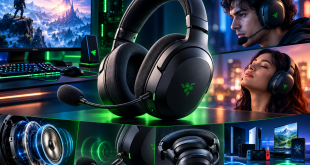
Gaming is often judged as simple entertainment, but modern research and real-world behavior suggest something much more meaningful is happening when people play. Unlike passive media, gaming forces the brain to stay active every second, processing visual signals, predicting outcomes, managing risk, recalling patterns, and adjusting strategy in real time. This constant mental workload creates a training environment where attention, memory, and decision speed are repeatedly challenged. The important point is not that all gaming is magically beneficial no matter how it is used, but that interactive play has qualities that can strengthen cognitive functions when done with balance and intention. In other words, gaming is not only about fun. It is also a system of rapid feedback, and rapid feedback is one of the most effective drivers of learning.
What makes this even more relevant today is that the way people learn and communicate has changed dramatically. We now live in an attention economy where information comes fast and environments shift constantly, which means the ability to adapt quickly has become a core mental skill. Games simulate that pressure in structured ways. Players must react to uncertain situations, manage limited resources, and make choices with incomplete data. Over time, this can improve cognitive flexibility and stress management under pressure. That is why the question is no longer “Are games good or bad?” The better question is “Which types of games train which mental skills, and how can we use them in healthy ways?”
1) Gaming Trains Fast Thinking and Strategic Decision-Making

One of the strongest mental effects of gaming is the training of high-speed decision-making. In many games, especially competitive and action formats, the player must evaluate several variables at once: movement, timing, opponent behavior, map position, and tool availability. These decisions are rarely isolated. They happen in sequences where one choice influences the next five outcomes. This repeated process can sharpen executive control, improve pattern recognition, and reduce hesitation in complex scenarios. While the game context is virtual, the mental exercise is real: attention allocation, priority sorting, and rapid adaptation are all cognitive tasks used in daily life, work, and education.
Gaming also trains strategic persistence. Good players do not simply react, they analyze failure, identify weak points, and redesign their approach. That cycle of test, fail, adjust, and improve is similar to high-performance learning in many professional fields. Instead of being discouraged by errors, players who progress learn to treat mistakes as usable data. This mindset is valuable beyond gaming because it supports resilience and growth thinking. In short, gaming does not just reward fast hands. It rewards better thinking under pressure.
2) Gaming Can Strengthen Social Intelligence and Team Coordination

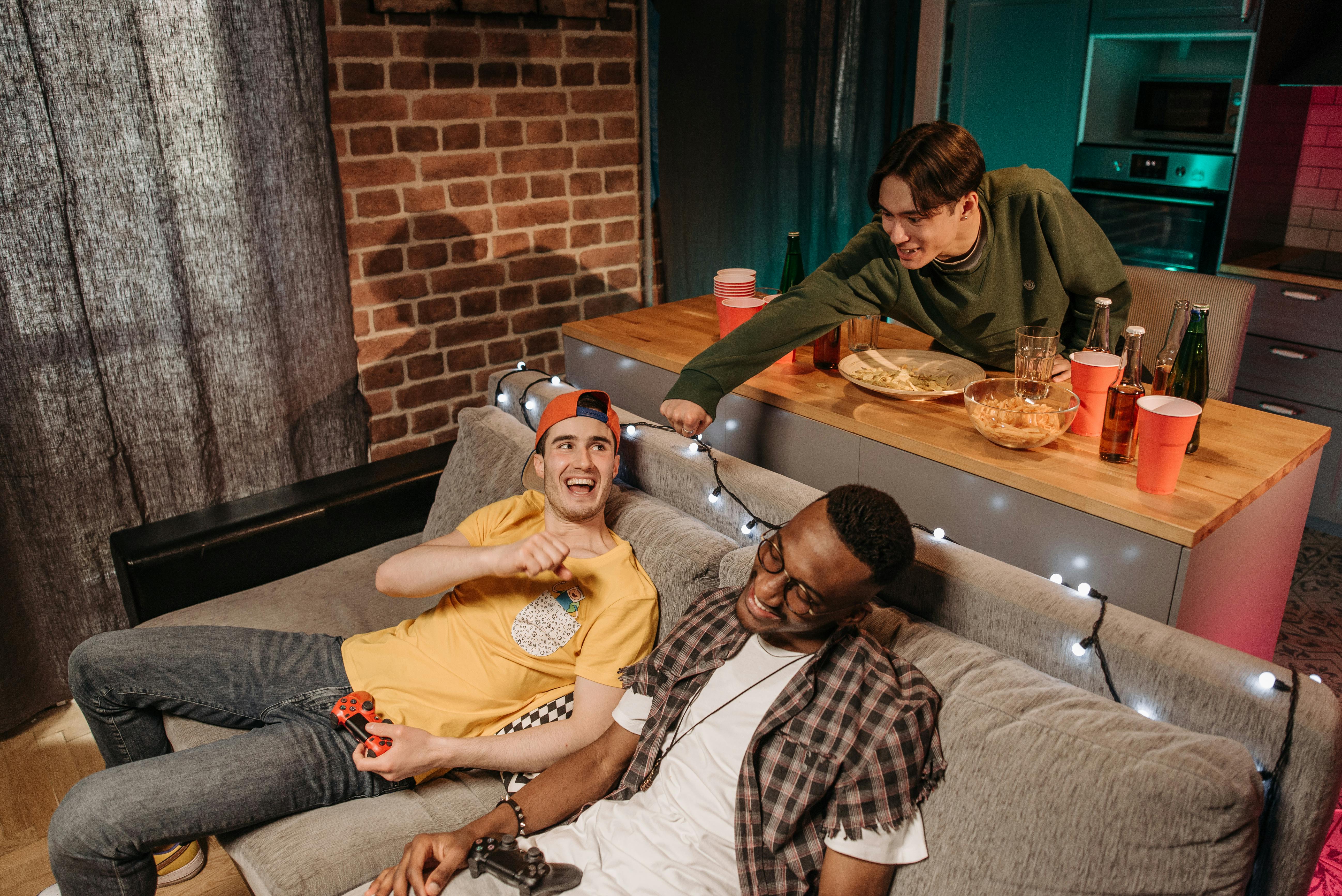
A major misconception is that gaming is automatically isolating, when in reality many modern games are deeply social environments. Team-based play requires communication precision, role clarity, trust, and emotional control, especially in high-pressure moments where one mistake can affect the whole group. Players learn to share information quickly, make cooperative decisions, and recover from setbacks together. These are social skills with clear real-world parallels. The context may be digital, but the behaviors are interpersonal: leadership, listening, adaptation, and conflict management all appear naturally in multiplayer gaming culture.
Gaming communities can also provide belonging and continuity, which matters for mental well-being. Many players develop long-term friendships, support systems, and social routines through shared play. For some people, especially those who struggle with confidence in offline social settings, gaming spaces can become low-barrier environments for practicing communication and teamwork. This does not mean gaming should replace offline life, but it does challenge the outdated idea that gaming is always antisocial. Used well, it can support social development in meaningful ways.
3) Gaming and STEM: A Natural Learning Bridge

Gaming also connects strongly with STEM learning because it naturally combines systems logic, experimentation, creativity, and iterative thinking. Players constantly test mechanics, optimize choices, and discover relationships between actions and outcomes. In sandbox and strategy environments, they often engage in planning behaviors similar to engineering processes: set goals, allocate resources, build structures, and troubleshoot failures. This active problem-solving model can make technical thinking more accessible than traditional instruction for many learners because it transforms abstract concepts into interactive challenges with immediate feedback.
In educational contexts, this is a powerful advantage. Instead of memorizing information passively, learners can experience cause-and-effect in real time. They can see how small changes produce different outcomes and refine their approach quickly. That process mirrors scientific reasoning itself. Hypothesis, experiment, observation, and adjustment are not just classroom concepts, they are core gameplay loops in many genres. This is why gaming is increasingly relevant in conversations about future skills, not as a replacement for education, but as a practical, engaging extension of how people learn.
4) AI Will Make Brain-Training Games Smarter and More Personalized

As AI becomes more integrated into game systems, the cognitive potential of gaming is likely to increase further. One major shift is personalization. Instead of giving every player the same difficulty curve, AI-assisted design can adapt challenge levels based on behavior, keeping players in an optimal learning zone where tasks are demanding enough to stimulate growth but not so hard that motivation collapses. This balance is crucial for cognitive development because improvement happens fastest when challenge and skill are properly matched.
AI can also improve feedback quality. Advanced analysis systems can identify repeated tactical mistakes, attention lapses, and inefficient habits, then suggest targeted improvements. This helps players train with more precision instead of random repetition. At ecosystem level, AI can support moderation, fair matchmaking, and healthier communities, which improves overall session quality and long-term engagement. The key is responsible implementation. AI should guide better learning and safer play without removing human creativity and exploration, which remain the heart of meaningful gaming.
Conclusion
Gaming does not improve the brain automatically, and it is not a substitute for sleep, movement, and real-life balance. But when used intentionally, it can train valuable mental capacities: faster decision-making, stronger spatial awareness, better memory use, improved social coordination, and more resilient problem-solving habits. That is why the old stereotype of gaming as pure distraction is no longer enough. The evidence and experience now point toward something more nuanced and more useful.
The smartest way forward is not to blindly praise or blindly reject gaming. It is to understand it, design it well, and use it strategically. In a world that rewards adaptability and continuous learning, gaming can be more than entertainment. It can be structured cognitive practice that helps people think sharper, connect better, and grow faster.